Author: Makky

  • What Does Personal Success Actually Mean?

    What Does Personal Success Actually Mean?

    Lately, I’ve been thinking about what it means to be successful. Not just successful in the way we usually define it, having a good career, making money, achieving goals, getting recognition, but what personal success actually means.

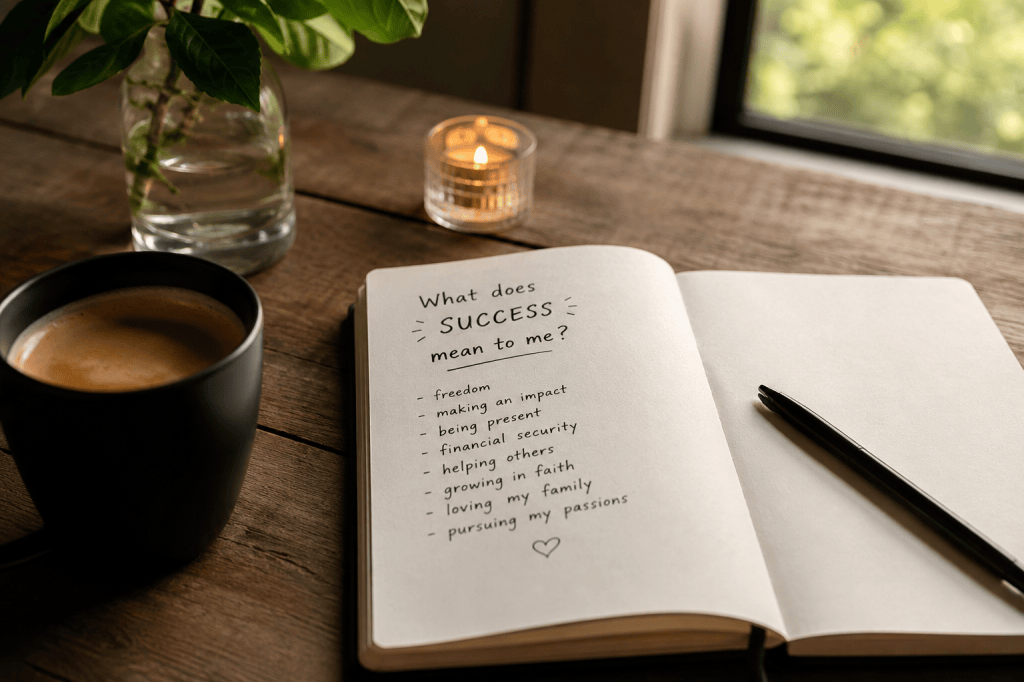
    What does it mean for me to be successful?

    This thought came to me recently while thinking about Kylian Mbappé and some of the conversations around his career. By almost every measure, he is an incredibly successful footballer. He has achieved things that most of us can only imagine. He has won individual awards, broken records, scored an incredible number of goals, and established himself as one of the best players of his generation.

    And yet, there is still this conversation about what he hasn’t won. The team trophies. The medals. The World Cup.

    This somehow irks me.

    It made me think about how interesting our definition of success can be. Someone can be exceptionally good at what they do and have accomplished things that are remarkable by all standards, but somehow those accomplishments can feel less significant because they don’t have the particular trophy or recognition that everyone else is looking for.

    And then I started thinking about my own life.

    What is my scoreboard?

    If I were to sit down and define success for myself, what would I put on the list?

    A successful career? Financial security? Certain degrees or certifications? A happy marriage? Healthy, well adjusted children? A tidy home? Being a good friend? Growing in my relationship with God? Learning new things? Taking care of myself? Building something of my own?

    There are so many things that could go on the list. And I don’t think there is anything wrong with wanting any of these things. In fact, I want many of them.

    But I started wondering: Who decides what makes someone successful?

    And even more importantly, how much of my definition of success is actually mine?

    The need for recognition

    I think this is where it gets interesting.

    Because, if I’m being completely honest, I like recognition. I like knowing that I did something well. I like it when someone notices that I’ve worked hard. I like achieving something that other people consider impressive.

    I don’t think there is anything wrong with that.

    But I don’t want to get to a point where I need other people to recognize my accomplishments before I can recognize them myself.

    What if I set a goal for myself and actually followed through, but nobody else knew? Would that still count?

    What if I decided that something was important to me and I showed up consistently for it, even though it didn’t result in a promotion, an award, or some other visible accomplishment? Would I consider that success?

    I think the answer should be yes.

    But I’m not sure that I’ve always lived that way.

    The things that don’t make the résumé

    There are some accomplishments that don’t really have anywhere to go on a résumé.

    • Becoming more patient.
    • Being more present with your children.
    • Learning to say no.
    • Being a better wife.
    • Keeping a promise you made to yourself.
    • Getting through a difficult season without giving up.
    • Growing in your faith.
    • Taking better care of yourself.
    • Being consistent with something you’ve struggled with for years.

    Nobody is going to give you a trophy for these things. There may not even be anyone around to notice.

    But they can still be some of the most meaningful accomplishments of our lives.

    And maybe that’s one of the problems with the way we sometimes think about success. We tend to focus on the things that are easy to measure and easy for other people to see.

    Degrees. Titles. Salaries. Houses. Awards. Followers.

    Even when we set goals, we focus on SMART goals. But some of the things that matter most are much harder to measure.

    What matters now?

    I think this is where the idea behind this blog really comes in.

    Maybe success isn’t something we define once and then spend the rest of our lives trying to achieve. Maybe it changes as we move through different seasons of life.

    What mattered to me at 25 isn’t necessarily what matters to me now, more than a decade later. And what matters to me now may not be what matters to me ten years from now.

    Maybe personal success is less about checking off a universal list of accomplishments and more about asking:

    What matters to me in this season?

    And then, this is the hard part, actually living according to that answer.

    Because it’s easy to say that family matters and then give all of our energy to work.

    It’s easy to say that our health matters and continue putting it at the bottom of the list.

    It’s easy to say that we want to build something meaningful but spend all of our free time consuming what everyone else is doing.

    Knowing what matters is one thing. Actually prioritizing it is another.

    I’m still figuring this out

    I don’t think I have a perfect definition of personal success yet. I’m still figuring it out.

    But I think I’m becoming more interested in having a definition that is actually mine. I want to be able to look at my life and recognize the things that I am proud of, even if they aren’t particularly impressive to someone else.

    I want to celebrate progress that nobody else sees. I want to be able to say, I told myself I was going to do this, and I did it. I want to be careful not to measure my life entirely by someone else’s scoreboard.

    Maybe success isn’t always about winning the trophy.

    Maybe sometimes it is simply knowing that you played the game you actually wanted to play and that you showed up, leaned in, failed at some things, learned new things, and gave it your best.

    So I’m curious:

    How do you define personal success?

    And perhaps an even harder question:

    If nobody else could see or recognize your accomplishments, what would still make you feel successful?

    I’d really love to hear what you think.

  • Beyond the Culture of Silence: The Healing Power of Shared Experiences

    Hello! Amaka here again 👋🏾. Today, I want to talk about something that’s been sitting on my heart for a while.

    “A problem shared is a problem half solved.”

    As a child, I heard this often—usually from an adult trying to coax me into revealing what was clearly bothering me. But despite how often I heard it, I didn’t truly believe it. At the time, I had no evidence that it actually worked.

    So I developed a habit of internalizing my struggles. I’d bury problems deep and hope that, with time, they’d quietly disappear. In truth, I wasn’t alone in this.

    In many Nigerian homes, vulnerability wasn’t the default posture. There was an unspoken expectation to present strength—even when you were crumbling inside. People mostly shared their wins: perfect grades, flawless careers, thriving relationships.

    I remember hearing stories of how our parents were always top of their class. So when I struggled in a subject, I didn’t feel safe admitting it. I thought something was wrong with me. Why couldn’t I be effortlessly excellent too?

    For more than 25 years, I coped with pain and disappointment by going inward—alone.

    What Changed?

    With the rise of blogs, podcasts, and vlogs, I began to encounter people who didn’t pretend. People who shared their failures, doubts, missteps, and insecurities.

    And guess what? They were so much more relatable than those who seemed to live perfect lives. Their stories gave me the courage to start opening up.

    When I began sharing my own goals, frustrations, and fears with trusted people, I realized two critical truths:

    • Sharing with the wrong people can be damaging. Some folks may not handle your vulnerability with care. They may diminish your experience, dismiss your feelings, or even use your openness against you.
    • Sharing with the right people can be transformative. The right listener can catapult you into peace. They can offer wisdom, perspective, encouragement—or just a safe space to be human.

    The Unexpected Benefits of Sharing

    When done with the right people, sharing can:

    • Help you learn from others’ experiences
    • Prevent unnecessary mistakes
    • Increase clarity and focus
    • Lighten emotional loads
    • Strengthen your support network

    So Should We Share Everything with Everyone?

    Absolutely not. That’s where discernment and community come in.

    If possible, identify someone who has done what you’re trying to do—or someone who’s overcome what you’re currently battling. This could be a mentor, a friend, a colleague, or even a podcast host you deeply resonate with.

    But remember: people’s personal experiences will always color their advice. So take what serves you and adapt it to your own values and context.

    In the professional world, this might look like joining an empowerment network or mastermind group. In your personal life, it might mean cultivating emotionally safe relationships where vulnerability isn’t punished but protected.

    Whether your goals involve fitness, parenting, marriage, financial growth, or healing from past trauma, the right relationships can make all the difference.

    And if no one comes to mind right now, that’s okay too. Consider working with a life coach, therapist, or mentor. Sometimes, having a neutral sounding board is the best gift you can give yourself.

    Flip the Script: Be That Person

    Are you in a position to be that person for someone else?

    • Check in on your people
    • Offer a listening ear without judgment
    • Start a small community of like-minded folks at different stages of growth

    Support doesn’t always require expertise—just presence.

    In Summary

    Choosing to share your goals and struggles with the right people could be the difference between growth and stagnation, clarity and confusion—or even peace and burnout.

    Do you have a tribe to hold you up, or are you walking this path alone?

    Let’s talk about it—right here in the comments 👇🏾

  • From Intentions to Growth

    Small steps. Honest reflection. Real growth.

    Hi there! My name is Amaka. I’m a sensitive soul who deeply values relationships. I love peace and calm—think: reading a good book on a quiet beach. I enjoy learning new things and solving technical or analytical problems. I’m also a certified over-thinker (working on the recovery part!). I’m so glad my dear friend Ekeoma invited me to contribute to this space.

    Every year, I write down goals. And every year, many of them remain unchecked by December.

    At the start of this year, I decided to shift my focus—to prioritize growth. I identified a few key areas of my life where I wanted to grow, and now, entering the second quarter of the year, I’ve been reflecting:

    What has worked? What hasn’t? And what do I still need to begin?

    My Approach (So Far)

    As a recovering over-thinker, I knew I had to break things down into manageable pieces. Here’s what I’ve tried:

    1. Set clear, measurable goals.
    This came naturally to me—I’m the queen of planning! One example: I committed to investing $XX every month. Simple and measurable.

    2. Set up my environment for success.
    I tried to remove temptations, like unhealthy snacks from the house. I say tried because, well… the best-laid plans don’t always pan out.

    3. Create accountability systems.
    I tracked food and exercise using apps. Helpful, but not nearly as powerful as having an actual person check in and challenge me.

    4. Minimize friction.
    I automated what I could—like setting up a direct deposit to my investment account—so that growth didn’t rely on daily willpower.

    5. Stay consistent.
    This has been the hardest part, especially when it comes to becoming a healthier version of myself.

    What I’ve Learned

    I’ve made solid progress in external areas like finances and personal development through learning. But when it comes to changing long-standing habits, it’s been more of a struggle.

    One thing I’d like to fully commit to is the 75 Soft program. Truthfully? I’ve restarted every Monday since I said I’d begin. But I’m determined to refine my approach and give myself a real shot at success.

    Let’s Grow Together

    Is there something you’ve been trying to commit to—but keep getting stuck? Let’s keep each other accountable.

    Drop a comment below—I’d love to hear what you’re working on and how we can support each other.